Get the insights you need—right when you need them. Learn more!
Culture Health Scorecard
Your culture already exists—this scorecard simply makes it visible.
The Culture Health Scorecard is a proprietary diagnostic designed to give leaders a clear, honest snapshot of how culture is actually showing up inside the organization. It identifies strengths, blind spots, and misalignment across key cultural drivers that directly impact performance, engagement, and safety.
This isn’t a survey that sits on a shelf.
It’s a focused tool that helps leadership teams make informed decisions, align priorities, and take action where it matters most.
The result: clarity, ownership, and a practical path forward.
Converting Frontline Feedback into Actionable Strategies
The Culture Health Scorecard helps leaders understand how their culture is actually being experienced—not how it’s intended to feel.
Through structured input and expert interpretation, the scorecard surfaces patterns in communication, trust, accountability, collaboration, and leadership signals that directly influence performance, engagement, and safety.
This is not a generic survey or benchmarking tool. It’s a guided process designed to create clarity, identify cultural blind spots, and inform focused leadership action. The result is shared understanding and practical insight leaders can use to strengthen alignment and decision-making.
Simplify
A Clearer Way to Understand Culture
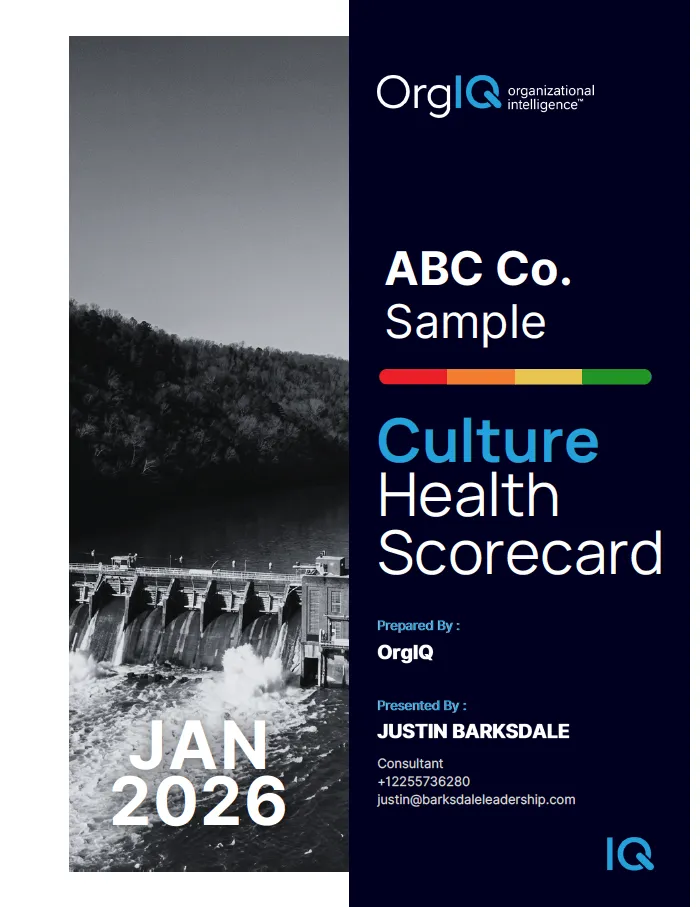
Download a sample Culture Health Scorecard to see how culture can be examined thoughtfully and responsibly.
This example reflects how we help leadership teams move beyond assumptions and surface meaningful patterns related to communication, accountability, trust, and collaboration—without turning culture into a checkbox exercise.
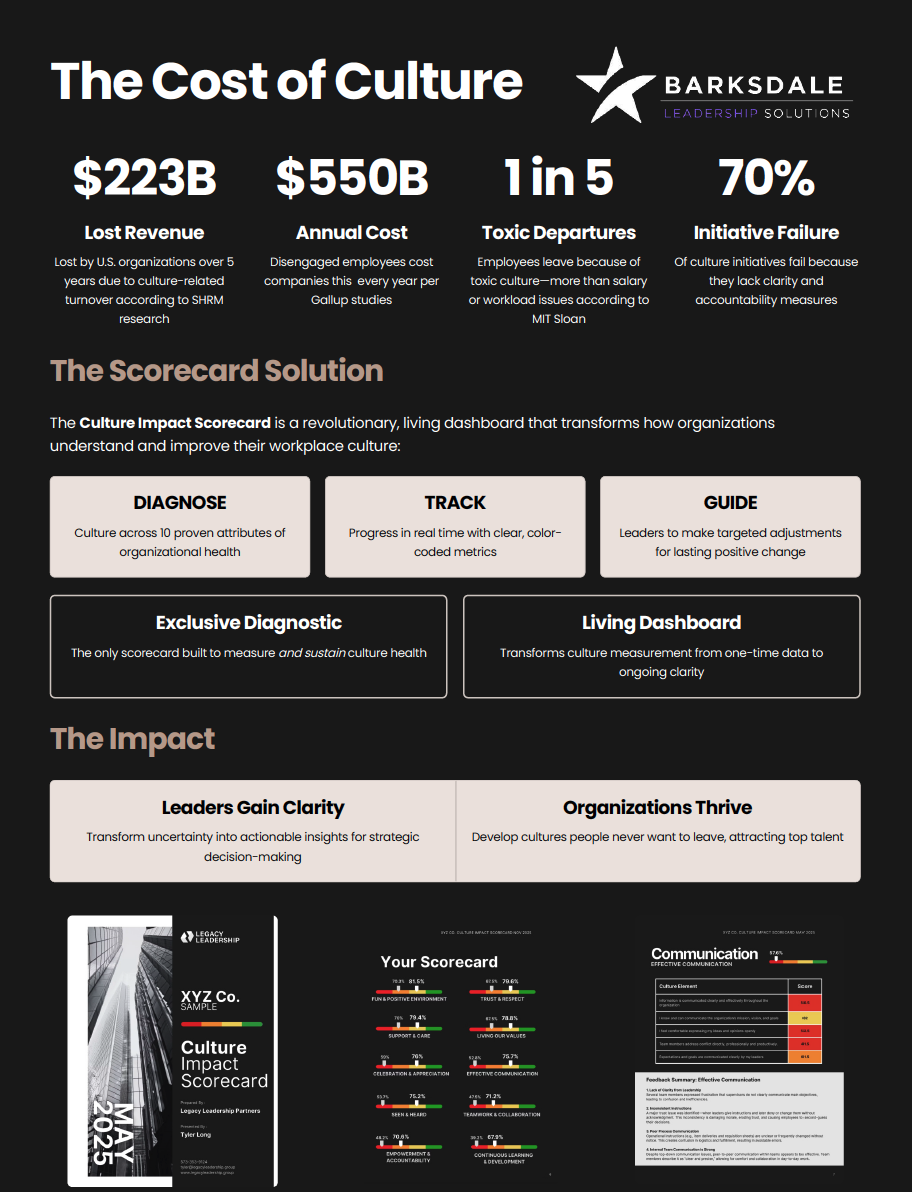
What's Your Culture Costing You?
Culture isn’t a soft metric—it’s a bottom-line driver. When ignored or misaligned, culture quietly becomes one of the most expensive liabilities in your organization.
Here's what it's costing you
Turnover
The #1 reason people leave jobs isn’t pay—it’s culture. (MIT Sloan)
Replacing a single employee costs up to 2x their salary. (Gallup)
Toxic cultures lead to up to 3x higher turnover rates. (SHRM)
Only 2 in 10 employees strongly agree that their culture connects them to their work. (Gallup)
Productivity Loss
Disengaged employees are 18% less productive. (Gallup)
“Presenteeism” (employees showing up but not contributing) costs U.S. businesses $1,500 to $5,000 per employee annually. (Harvard Business Review)
Silos, confusion, and lack of clarity kill momentum and innovation. (McKinsey & Co.)
Leadership Gaps
Without cultural clarity, managers default to managing tasks, not leading people.
Teams follow inconsistent norms, causing misalignment and morale issues.
Leaders spend 30–50% of their time dealing with people problems that are really culture problems. (Deloitte)
Missed Opportunity
Culture is a competitive advantage—but only if it's healthy and intentional.
Companies with strong cultures outperform competitors by up to 33% in revenue growth and 20% in retention. (Forbes / Columbia Business School / Gallup)
So, What's it Costing You?
If you're not measuring culture, you're already paying for it. The Culture Health Scorecard reveals the silent leaks and equips you to build a team people never want to leave—and a culture that fuels performance, not frustration..


© 2026 Your Agency. All Rights Reserved.